

Contents:
- Why International Foods Matter Beyond the Plate
- The Basics: How Food Traditions Actually Spread
- Trade Routes
- Colonization and Forced Exchange
- Immigration and Diaspora Communities
- Intermediate Level: How Fusion and Adaptation Actually Work
- How Adaptation Happens in Practice
- Comparison: Fusion Food vs. Authentic Regional Variation
- Advanced Nuances: The Ongoing Tension Between Preservation and Adaptation
- The Role of Specialty Grocers in This Tension
- How Holidays and Celebrations Accelerate Cultural Food Exchange
- Examples Across Cultures
- Common Mistakes to Avoid When Exploring International Foods
- Practical Guidance for Exploring International Foods Thoughtfully
- Start With Context, Not Just Ingredients
- Seek Out Both the “Classic” and the Adapted Versions
- Support Direct Sourcing When Possible
- What This Looks Like in a Real Kitchen
- FAQ
- Is fusion food less “authentic” than traditional regional cuisine?
- Why do holiday foods stay more traditional than everyday meals in many families?
- What’s the difference between a domestically-made “style” product and a genuine import?
- How can I explore a new cuisine without accidentally treating it as monolithic?
- Why does ingredient sourcing matter so much for cultural food traditions?
- Conclusion
A common myth holds that food traditions stay pure and unchanged for centuries, passed down exactly as they always were, untouched by outside influence. The reality is almost the opposite: nearly every beloved “traditional” dish carries fingerprints from trade routes, migration, colonization, and cultural exchange going back hundreds or even thousands of years. Tomatoes weren’t part of Italian cooking until they arrived from the Americas in the 1500s. Chili peppers, now central to Sichuan cuisine, didn’t reach China until the 1600s. Understanding this changes how you think about food entirely — not as a fixed inheritance, but as a living record of how cultures have always borrowed from and enriched one another.
Why International Foods Matter Beyond the Plate
Food functions as one of the most durable, accessible forms of cultural transmission that exists. Unlike language, which can fade within a generation or two after immigration, or religious practice, which varies enormously in how strictly it’s maintained, food traditions tend to persist because they’re woven into daily life in a way that doesn’t require special occasions or formal instruction. A grandmother teaching a grandchild to make pierogi, or a father passing down a specific curry recipe, transmits culture through repetition and taste memory in a way that’s remarkably resistant to assimilation pressure.
Researchers studying immigrant communities have consistently found that food practices survive longer, and change more slowly, than many other cultural markers. This is part of why international grocery stores and specialty food retailers play a role that goes beyond simple commerce — they’re often the infrastructure that makes it possible for a family two or three generations removed from immigration to still cook the dishes their great-grandparents made, using ingredients that a standard supermarket simply doesn’t stock.
The Basics: How Food Traditions Actually Spread
Trade Routes
Long before modern shipping and refrigeration, spices, grains, and preserved foods moved along trade routes that connected distant regions centuries before those regions had any other meaningful contact. The Silk Road carried not just silk but also spices, dried fruits, and food preservation techniques between China, Central Asia, the Middle East, and eventually Europe, starting as early as the 2nd century BCE. The spice trade between Southeast Asia, India, and Europe, which intensified from the medieval period onward, is directly responsible for why cinnamon, nutmeg, and pepper became staples in European cooking despite none of those plants being native to the continent.
Colonization and Forced Exchange
Not all cultural food exchange happened through voluntary trade. Colonization forced ingredient exchange on a massive scale, often violently and without consent from the populations most affected. The Columbian Exchange, following European contact with the Americas starting in 1492, moved tomatoes, potatoes, corn, and chili peppers to Europe, Africa, and Asia, while wheat, cattle, and sugar cane moved in the opposite direction, reshaping diets on every continent within a few generations. Sugar cane cultivation in the Caribbean, built on the forced labor of enslaved people, permanently altered global sweet consumption patterns and remains a difficult but essential part of understanding how many “traditional” sweets from Europe and elsewhere became possible in the first place.
Immigration and Diaspora Communities
The most direct and ongoing driver of food culture exchange today is immigration. When people move, they bring food knowledge with them, and that knowledge takes root in new communities, sometimes adapting to locally available ingredients and sometimes demanding that new supply chains form to support the original version. Polish immigration to the US, concentrated heavily in cities like Chicago starting in the late 1800s and continuing through the 20th century, is a clear example — it didn’t just introduce pierogi and kielbasa to American cities, it built lasting infrastructure of delis, butchers, and eventually specialty retailers carrying genuine Polish food products that persist generations later, long after the original immigrant generation has passed.
Intermediate Level: How Fusion and Adaptation Actually Work
Fusion food gets a mixed reputation, sometimes dismissed as a marketing gimmick or a dilution of “authentic” cuisine. That framing misses how much of what’s now considered classic and traditional was itself once a fusion of available ingredients and existing techniques. Tex-Mex, Chinese-American food, and Italian-American food are all frequently criticized as inauthentic departures from their origin cuisines, yet each has developed its own coherent internal logic and, in some cases, has existed for well over a century — long enough to be a legitimate tradition in its own right rather than a lesser copy of something else.
How Adaptation Happens in Practice
When a cuisine moves to a new region, three things typically happen. First, ingredient substitution occurs where original ingredients aren’t available — Chinese-American cooking developed broccoli beef partly because broccoli was cheap and widely available in the US in a way that Chinese vegetables like gai lan weren’t in most mid-20th-century American cities. Second, flavor profiles often shift to match local preferences, generally trending sweeter or less intensely spiced to suit a broader audience unfamiliar with the original intensity. Third, new dishes sometimes emerge that don’t exist in the country of origin at all, created specifically by immigrant cooks adapting to their new environment and customer base — California rolls, for instance, were developed in Los Angeles in the 1960s and 70s specifically to appeal to American diners hesitant about raw fish, and have since become popular even back in Japan as a distinctly American-Japanese fusion export.
Comparison: Fusion Food vs. Authentic Regional Variation
People often confuse deliberate fusion cooking with authentic regional variation, but the two are genuinely different phenomena. Regional variation happens organically within a cuisine’s home country or region over long periods — Sichuan and Cantonese cooking are both authentically Chinese despite tasting almost nothing alike, because each developed independently within China based on local climate, available ingredients, and historical trade access. Fusion food, by contrast, is a more deliberate combination of techniques or ingredients from genuinely separate culinary traditions, often created outside the original country entirely, frequently by immigrant communities adapting to a new environment. Neither is inherently more legitimate than the other — they’re just different processes, and conflating them leads to a lot of unfair “authenticity” arguments that miss how cuisines actually evolve in the real world.
Advanced Nuances: The Ongoing Tension Between Preservation and Adaptation
Within immigrant and diaspora communities, there’s often real tension between preserving food traditions exactly as they were and allowing them to evolve naturally in a new context. Older generations sometimes view adaptation as a loss of authenticity, while younger generations, especially those raised in the new country, may see thoughtful adaptation as a way to keep a tradition alive and relevant rather than freezing it in place. Neither position is simply right or wrong — both reflect genuine, reasonable responses to the same underlying challenge of maintaining identity across generations and geography.
The Role of Specialty Grocers in This Tension
Specialty international grocers occupy an interesting position in this dynamic. By making original, unadapted ingredients accessible even to people several generations removed from immigration, they give families a genuine choice rather than forcing adaptation purely out of ingredient scarcity. A third-generation Polish-American who wants to make her grandmother’s exact bigos recipe, rather than an Americanized approximation, needs access to real kielbasa, proper dried mushrooms, and fermented sauerkraut — not just whatever’s available at a standard supermarket. This is precisely the gap that a dedicated retailer sourcing directly from producers fills, and it matters more than it might initially seem, since ingredient access is often the single biggest factor determining whether a family tradition survives intact or gradually fades into a vague, simplified memory.
How Holidays and Celebrations Accelerate Cultural Food Exchange
Holidays deserve particular attention because they tend to be where food traditions are most rigorously preserved, even in families that have otherwise assimilated significantly in daily life. Someone who eats a fairly standard American diet all year might still insist on a completely traditional, from-scratch holiday meal once or twice a year, treating those occasions as non-negotiable preservation points for cultural identity.
Examples Across Cultures
- Lunar New Year — celebrated across China, Vietnam, Korea, and other East and Southeast Asian communities, typically involving specific symbolic foods like dumplings (representing wealth) or whole fish (representing abundance), timed to the lunar calendar and usually falling in late January or February.
- Easter in Polish and broader Eastern European communities — often centers on a blessed basket of foods including kielbasa, painted eggs, and babka, brought to church for a blessing ceremony that predates most families’ immigration by centuries.
- Ramadan and Eid — the daily iftar meal breaking the fast often includes dates and specific regional dishes, with Eid al-Fitr at the end of the month typically involving elaborate sweets, many rooted in centuries-old Middle Eastern and South Asian confectionery traditions.
- Christmas across European traditions — varies enormously by country, from Polish Wigilia’s twelve meatless dishes to Italian Feast of the Seven Fishes, each preserving specific regional practices that predate most families’ arrival in the US by generations.
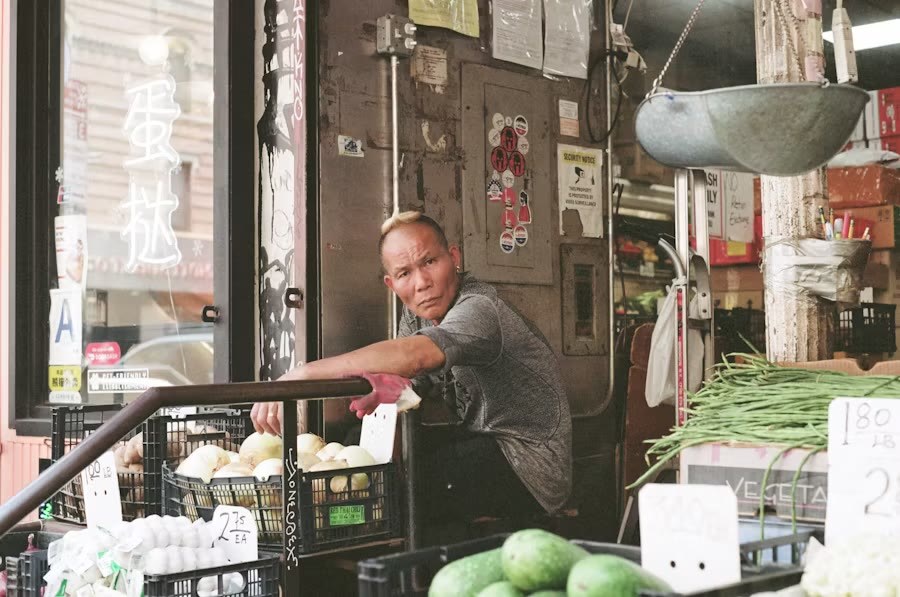
This is also where demand for specialty ingredients spikes predictably each year, and where a reliable source for European sweets and other holiday-specific staples becomes especially valuable — running out of a specific ingredient a week before a major holiday isn’t just an inconvenience, it can mean an entire family’s celebration feels incomplete.
Common Mistakes to Avoid When Exploring International Foods
- Assuming one country’s cuisine is monolithic. Treating “Chinese food,” “Mexican food,” or “Indian food” as single, uniform categories ignores enormous internal regional variation that matters as much as, or more than, the national label.
- Conflating fusion with inauthenticity. Dismissing Tex-Mex, Chinese-American, or other diaspora cuisines as simply “wrong” versions of an original ignores that these traditions have their own legitimate histories, sometimes spanning well over a century.
- Buying a single “representative” product and assuming it covers an entire cuisine. One curry powder doesn’t represent Indian cooking any more than one type of pasta represents Italian cooking — both cuisines contain enormous regional and category depth.
- Ignoring the difference between a product made locally under a similar name and a genuine import. A domestically produced “Polish-style” sausage and an actual imported Polish kielbasa can taste noticeably different, since production standards and traditional methods often don’t transfer directly.
- Treating adaptation as automatically inferior to “pure” tradition. Many adapted dishes reflect genuine creativity and resourcefulness rather than a failure to maintain authenticity, and dismissing them outright overlooks real culinary history.
Practical Guidance for Exploring International Foods Thoughtfully
Start With Context, Not Just Ingredients
Understanding a little bit of the history and regional context behind a dish or ingredient — even just a few sentences worth — makes the eventual cooking experience more meaningful and helps avoid the common trap of treating an entire country’s food culture as one undifferentiated category. This doesn’t require deep academic research; even a basic understanding of which region a dish comes from and roughly when a particular ingredient entered that cuisine’s history adds real depth to the experience.
Seek Out Both the “Classic” and the Adapted Versions
Trying both a traditional, unadapted version of a dish and a diaspora or fusion adaptation of the same general cuisine — say, a traditional Polish kielbasa and sauerkraut dish alongside a Chicago-style Polish sausage sandwich, or genuine Sichuan mapo tofu alongside an Americanized version — offers a more complete picture of how a food culture has actually lived and evolved across different contexts, rather than treating only one version as legitimate.
Support Direct Sourcing When Possible
Buying from retailers that source directly from producers in the country or region of origin, rather than exclusively from domestic manufacturers producing “style” versions, supports the original supply chains and often results in a more accurate flavor and texture. This matters most with items where production method genuinely affects the outcome — fermented products, cured meats, and traditionally processed staples all vary significantly based on whether they’re made using original techniques or adapted, often accelerated, domestic processes.
What This Looks Like in a Real Kitchen
Consider a household that celebrates both a Polish heritage on one side of the family and has developed an interest in Sichuan cooking through years of trying new restaurants and recipes. Over a typical month, that kitchen might include a genuinely traditional Sunday bigos made with real kielbasa and dried mushrooms sourced from a specialty retailer, alongside a weeknight mapo tofu built from doubanjiang and Sichuan peppercorns, and a holiday dessert spread pulling from both Polish makowiec (poppy seed roll) traditions and a few pieces of imported Turkish delight picked up out of curiosity. None of these traditions dilute each other — they coexist in the same kitchen precisely because each ingredient and technique is sourced with enough specificity to represent its own tradition accurately, rather than blending everything into an undifferentiated, vaguely “international” muddle.
Rudca Food’s catalog is built around supporting exactly this kind of household — one that wants to maintain specific cultural food traditions accurately while also exploring genuinely new ones, rather than settling for a shallow, one-size-fits-all approach to international grocery shopping. Organizing products by country and region, rather than lumping everything into one generic “world foods” category, reflects an understanding that these traditions deserve to be treated as distinct rather than interchangeable.
FAQ
Is fusion food less “authentic” than traditional regional cuisine?
Not inherently — fusion food and regional variation are different processes, and many fusion dishes, like California rolls or Tex-Mex, have developed their own legitimate, decades-long traditions rather than being lesser imitations of an original.
Why do holiday foods stay more traditional than everyday meals in many families?
Holidays often function as deliberate preservation points for cultural identity, where families maintain exact traditional recipes even if their everyday eating habits have otherwise adapted significantly to a new country.
What’s the difference between a domestically-made “style” product and a genuine import?
A domestic product made “in the style of” an original often uses different production methods or regulations, which can noticeably change flavor and texture compared to a genuinely imported version made through traditional methods.
How can I explore a new cuisine without accidentally treating it as monolithic?
Look into regional variation within that country specifically — most major cuisines, from Chinese to Indian to Italian, contain enormous internal diversity that a single “national” dish or ingredient can’t represent on its own.
Why does ingredient sourcing matter so much for cultural food traditions?
Because production method and regional origin often directly affect flavor and texture in ways that generic substitutes can’t replicate, ingredient access is frequently the deciding factor in whether a family tradition survives accurately across generations.
Conclusion
International foods have always been a record of exchange rather than a static inheritance, shaped by trade, migration, and adaptation across centuries. Understanding that history doesn’t diminish any tradition — it deepens appreciation for how much movement, resilience, and creativity sits behind even the most familiar dish on a family’s table, and it makes the case for sourcing ingredients thoughtfully rather than settling for whatever generic substitute happens to be nearby.